2030 World Cup Format: 48 Teams, 6 Hosts, 104 Matches
Updated: October 17, 2026
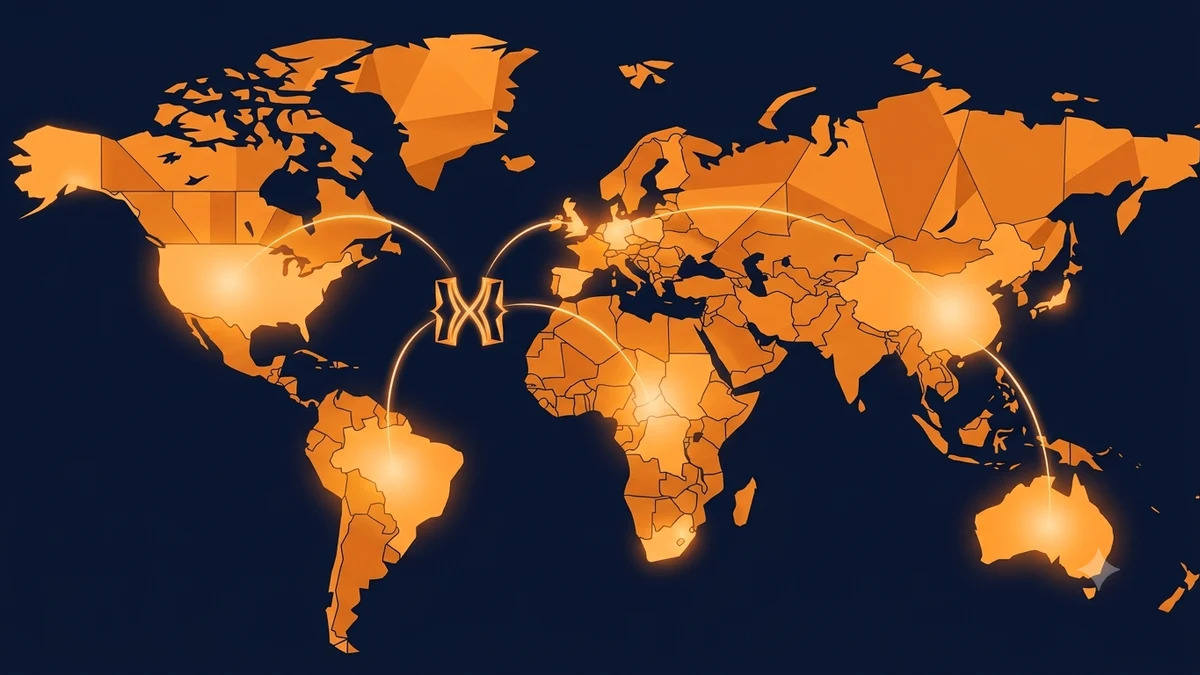
The 2030 World Cup is a 48-team tournament — 12 groups of four, with the top two in each group plus the eight best third-place teams advancing to a round of 32, and 104 matches in all. Spain, Portugal, and Morocco are the hosts; Uruguay, Argentina, and Paraguay stage three centenary openers. (FIFA is studying a one-off 64-team expansion; no decision as of August 2026.)
How many teams play in the 2030 World Cup?
Forty-eight — the same field size that debuted at the 2026 World Cup, under the format FIFA's Congress ratified in December 2024. For the first time in tournament history, six teams qualify automatically as hosts: Spain, Portugal, and Morocco as the primary hosts, plus Uruguay, Argentina, and Paraguay as centenary hosts. The other 42 places are filled through each confederation's qualifying competition — here's how each of the six works.
One live asterisk hangs over that number. CONMEBOL, the South American confederation, has formally proposed expanding the centenary edition to 64 teams, and FIFA is taking the idea seriously enough to study it: it set an August 14, 2026 date to appoint an independent agency to analyze the impact, with the analysis due September 11, 2026. UEFA and the Asian Football Confederation have publicly opposed the expansion, no decision is scheduled, and any change would require FIFA Council approval. We break down the whole scenario — the 128-match structure, where every confederation stands, and who would get in that never has — in our 64-team World Cup explainer. Until that process ends, 48 is the format of record — and this page will be updated if it changes.
How do the groups work?
Twelve groups of four teams each play a single round-robin — three matches per team — and the top two in every group advance. They are joined in the knockout rounds by the eight best third-place teams, ranked across all twelve groups by points, then goal difference, then goals scored. That produces a knockout field of 32.
The math changes how group play feels. With 8 of 12 third-place teams surviving, two wins all but guarantees advancement and even a single win often keeps a team alive to the final matchday — the same structural shift the 2026 tournament introduced. A team that reaches the final will play eight matches: three in the group, then five knockout rounds. And how teams land in those twelve groups in the first place — pots, seeding, and the draw itself — is its own explainer.
Why is the 2030 World Cup in six countries?
Because the tournament's hundredth birthday begins where the World Cup itself began. Uruguay, Argentina, and Paraguay each host exactly one match on June 8–9, 2030 — and these are real group-stage fixtures, each nation's own opening game, not exhibition matches or a separate ceremonial round. After that first weekend, all three teams rejoin the tournament in the main host countries for the rest of their group schedules. The full story of why the World Cup starts this way — and what happened in 1930 — is its own piece.
Each of the three was chosen for a specific piece of 1930: Uruguay hosted and won the inaugural World Cup in Montevideo; Argentina was the first tournament's other finalist; and Paraguay is home to CONMEBOL, the only continental confederation that existed in 1930. The remaining 101 matches are staged by Spain, Portugal, and Morocco — making 2030 the first World Cup played across six countries, three continents, and two hemispheres.
How many matches will be played?
104 — the largest World Cup schedule ever, matching the 2026 total. The group stage produces 72 matches (twelve groups playing six games each), and the knockout bracket adds 32 more: sixteen in the round of 32, eight in the round of 16, four quarterfinals, two semifinals, the third-place match, and the final. Three of the 104 are the South American centenary matches; the other 101 are played in Spain, Portugal, and Morocco. The tournament opens with the centenary matches on June 8–9, 2030, holds its main opening in the three primary host countries on June 13–14, and runs roughly six weeks end to end.
When and where is the final?
July 21, 2030. The venue has not been awarded yet: Madrid's Santiago Bernabéu is widely reported as the frontrunner — including reports of an agreement between FIFA and Real Madrid that sources close to the organizing committee have denied — with Barcelona's Camp Nou and Casablanca's Grand Stade Hassan II also in contention. FIFA has not announced when it will decide; in September 2026 it said only that a decision would be made in due course. We'll update this page when it lands.
Want to play the format out yourself? The Tournament Builder runs the full 2030 structure — twelve groups, the third-place table, and the round-of-32 bracket — and every nation has its own page in the teams index tracking its road to 2030.
For the current field, see which teams have qualified for 2030 — a live tracker updated as every confederation's qualifying unfolds.
Format and host details reflect FIFA announcements as of August 5, 2026. Two items remain open: FIFA's study of a one-off 64-team expansion, and the final-venue award, for which FIFA has not announced a date (status checked October 17, 2026) — this page will be updated when either is decided.
MockSlate is an independent fan tool and is not affiliated with, sponsored by, or endorsed by FIFA or any national federation. Country and tournament names are used for identification purposes only.
FAQ
How many teams are in the 2030 World Cup?
48, under the format FIFA ratified in December 2024 — twelve groups of four, the same field size that debuted in 2026. FIFA is formally studying a one-off expansion to 64 teams for the centenary edition, but no decision has been made as of August 2026.
Which countries are hosting the 2030 World Cup?
Spain, Portugal, and Morocco are the primary hosts and stage 101 of the 104 matches. Uruguay, Argentina, and Paraguay each host one centenary celebration match at the start of the tournament. All six host nations qualify automatically.
Why do three matches happen in South America?
To mark the tournament's 100th anniversary. Uruguay hosted and won the first World Cup in 1930, Argentina was the 1930 runner-up, and Paraguay is home to CONMEBOL, the South American confederation. Each hosts one real group-stage match — its own team's opening game — on June 8–9, 2030.
How does the round of 32 work in 2030?
The top two teams in each of the twelve groups advance, joined by the eight best third-place teams, for a 32-team knockout bracket. From there it is single elimination — round of 32, round of 16, quarterfinals, semifinals, and the final on July 21, 2030.
Related team pages
Build your own 2030 World Cup
Pick the 48-team field, run the group draw, and play the knockout bracket through to a champion.
Open the 2030 Tournament Builder →