World Cup 2030 Draw: How the Pots Work and When It Happens
Updated: August 6, 2026
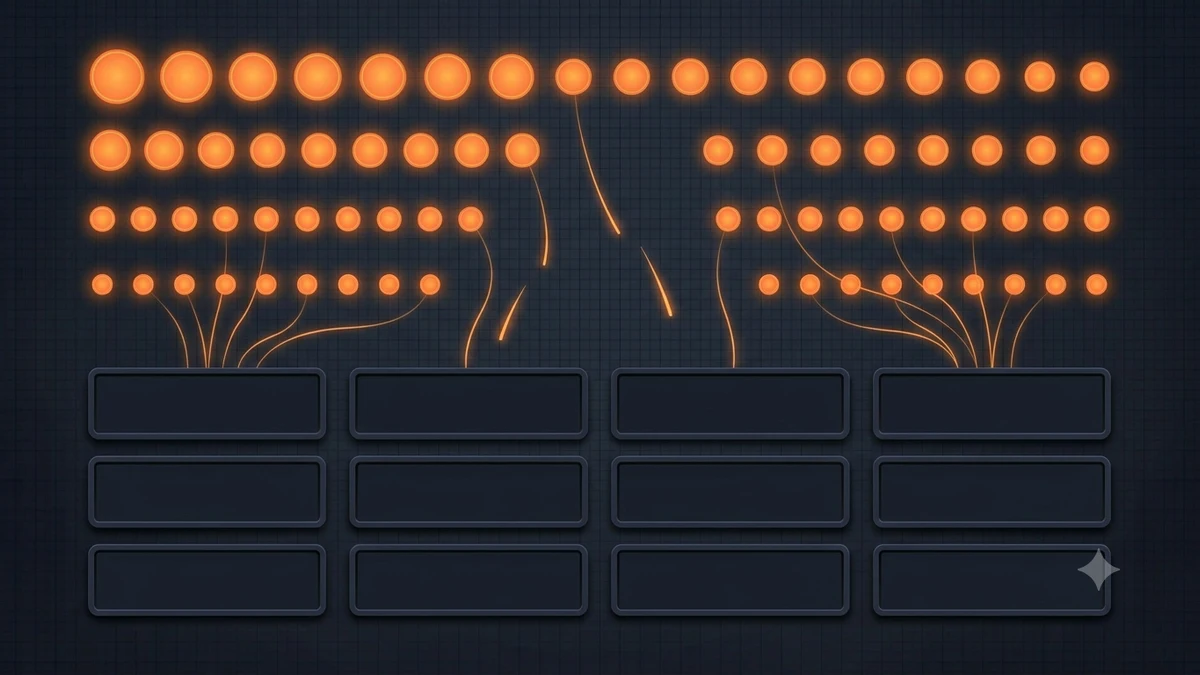
FIFA has published no draw date, no pot structure, and no seeding rules for the 2030 World Cup — everything specific to the 2030 draw is projection. What exists is precedent: the 2026 draw, held December 5, 2025, about six months before kickoff, with four ranking-based pots of twelve and the hosts seeded into Pot 1. Here is how that worked, and what it suggests for 2030 — with the guesses labeled as guesses.
How Were the Pots Built for the 2026 World Cup?
The 2026 draw — the first under the 48-team format, and the working model for 2030 — was held on December 5, 2025, at the Kennedy Center in Washington, D.C. The 48 teams went into four pots of twelve, ordered by the FIFA world ranking published that November 19. The three hosts were seeded into Pot 1 with fixed group positions — Mexico to A1, Canada to B1, the United States to D1 — and the nine highest-ranked qualifiers joined them. Pots 2 and 3 followed in straight ranking order, and Pot 4 held the six lowest-ranked qualifiers plus six placeholders for teams that didn't exist yet: the draw preceded the final playoffs, so two intercontinental playoff winners and four European playoff winners entered the bracket as unknowns.
Two rules shaped where anyone could land. Confederation separation: no group could hold two teams from the same confederation — except Europe, whose sixteen teams across twelve groups meant every group got at least one UEFA side and no group more than two. And a competitive-balance rule new to 2026: the four highest-ranked non-host teams were split across opposite halves of the knockout bracket, so none of them could meet before the semifinals if they won their groups.
How Would the 2030 Pots Likely Work? (Projection)
Everything in this section is reasoned projection from the 2026 precedent — FIFA has announced none of it. Under the ratified 48-team format, the natural repeat is four pots of twelve built on the FIFA ranking at draw time, hosts seeded into Pot 1, confederation separation with a UEFA exception, and some form of the bracket-balance rule.
But 2030 has a wrinkle 2026 didn't: six hosts instead of three. If all six are seeded — which is expected, not announced — they would fill half of Pot 1, leaving room for only the six highest-ranked qualifiers alongside them and pushing everyone else down a pot. And the fixed-position logic gets more interesting still: Uruguay, Argentina, and Paraguay open the tournament at home on June 8–9, which implies scheduling constraints on where their groups sit that FIFA has never had to design before. Whether all six hosts land in Pot 1, where their fixed positions go, and how seeding interacts with the still-unconfirmed confederation quotas are all FIFA's to announce — the same discipline applies to seeding as to quotas: 2026 is precedent, not policy.
When Will the 2030 World Cup Draw Be Held?
FIFA has not announced a date. The reasoning for the expected window is simple: the 2026 draw came about six months before kickoff, and earlier cycles ran similar lead times — so with the 2030 tournament opening June 8, a draw in late 2029 is the natural projection. Treat any specific "2030 draw date" you see elsewhere as invented until FIFA publishes one; this page will carry the real date the day it exists. What the draw needs before it can happen is a field — the qualified-teams tracker follows exactly that, and the 2026 precedent says a handful of playoff places may still be undecided on draw night.
How Would a 64-Team Draw Differ?
If FIFA's formal study of a one-off 64-team expansion became a decision, the draw changes shape entirely: sixteen groups of four means four pots of sixteen, a knockout that starts cleanly with sixteen group winners and sixteen runners-up, and no best-thirds table at all. Pot depth is the real difference — a sixteen-team Pot 1 reaches far deeper into the rankings than a twelve-team one, diluting what "seeded" means. No 64-team draw structure has been published because no 64-team tournament has been approved; the full scenario, confederation by confederation, is here.
What Is a Group of Death?
The draw's favorite phrase: a group where the pots align badly and every team is stronger than its pot number — a second seed at the top of Pot 2's range, a dangerous Pot 3 side, a playoff winner in Pot 4 that would have been ranked two pots higher had it qualified directly. The 2026 structure made them rarer (twelve groups spread the strength) but the eight-best-thirds rule made surviving one more forgiving. Want to feel how the pots actually collide? The Tournament Builder runs the full 2030 draw — build the pots, pull the balls, and construct your own group of death, with every nation's page tracking who might actually be in it.
The 2026 draw facts above are documented precedent from FIFA's published procedures and major-outlet coverage; every 2030-specific statement is labeled projection because FIFA has announced no date, pots, seeding, or quotas for 2030 as of August 6, 2026. This page updates when any of those land.
MockSlate is an independent fan tool and is not affiliated with, sponsored by, or endorsed by FIFA or any national federation. Country and tournament names are used for identification purposes only.
FAQ
When is the 2030 World Cup draw?
FIFA has not announced it. The 2026 draw was held on December 5, 2025 — about six months before kickoff — and by that precedent the 2030 draw would be expected in late 2029. That is a projection, not a date; this page will be updated when FIFA announces one.
How are World Cup pots decided?
By FIFA world ranking at draw time. In 2026, the 48 teams went into four pots of twelve: Pot 1 held the hosts plus the nine highest-ranked qualifiers, Pots 2 and 3 followed in ranking order, and Pot 4 held the lowest-ranked qualifiers plus placeholders for playoff winners decided after the draw.
Are host countries seeded in the World Cup draw?
In 2026, yes — the three hosts went into Pot 1 with fixed group positions. For 2030 that is expected but not announced, and it carries a new wrinkle: six seeded hosts would fill half of Pot 1, one of several seeding questions FIFA has yet to settle.
How many groups will the 2030 World Cup have?
Twelve groups of four under the ratified 48-team format, with the top two plus the eight best third-place teams advancing. If FIFA's study of a one-off 64-team expansion turns into a decision, that would become sixteen groups of four — but no decision has been made.
Build your own 2030 World Cup
Pick the 48-team field, run the group draw, and play the knockout bracket through to a champion.
Open the 2030 Tournament Builder →